

Fleet truck body customization turns a standard truck into a tool built around your daily work. The right body can improve payload, organization, safety, and productivity, whether you operate service vehicles, delivery trucks, utility units, or specialized vocational equipment. Understanding body types, materials, storage, power systems, and operating demands helps you invest in a truck that works harder and lasts longer.
At Hackney, we know fleet vehicles face demanding schedules, changing weather, heavy use, and constant pressure from drivers and technicians. With deep roots in North Carolina and a home base in Washington, NC, we build vocation specific truck bodies, trailers, shelving, parts, and fleet solutions around the way you work. The right configuration starts with a clear understanding of the job, the crew, and the conditions your fleet faces every day.
Key Takeaways
Choose the truck body around the vehicle’s actual work, including duty cycle, cargo, crew, routes, weather, and jobsite conditions. Service, utility, dump, box, refrigerated, crane, and specialized bodies each support different operational needs.
Match the complete upfit to the chassis by accounting for GVWR, axle ratings, payload, weight distribution, body dimensions, center of gravity, power demand, and ADAS integration. Proper planning protects safety, handling, vehicle components, and compliance.
Use organized, ergonomic storage, durable materials, appropriate lighting, secure tie-downs, and well-placed access points to reduce loading time, tool searches, operator strain, and jobsite risk. Auxiliary batteries and other power systems can improve efficiency when sized for the duty cycle.
Treat customization as a lifecycle investment by involving drivers, technicians, maintenance, fleet, and finance teams early, then evaluating fuel or energy use, maintenance, downtime, parts availability, resale value, and service life—not just the purchase price.
Fleet Truck Body Customization
Fleet truck body customization matches your truck body, equipment package, and onboard systems to the work your vehicles perform. That may mean installing a service body with organized compartments for technicians, a dump body for material handling, or a refrigerated body for temperature sensitive deliveries. The right upfit starts with your routes, cargo, tools, crew size, and jobsite conditions. It also accounts for the chassis, axle ratings, payload needs, and daily wear your fleet will face.
A well planned body can help your drivers spend less time searching for tools, loading materials, or returning to the shop for missing equipment. Proper storage keeps weight distributed and supplies protected, while features such as grab handles, lighting, steps, tie downs, and well placed controls can support safer work around the vehicle. You can also add onboard power, telematics, liftgates, cranes, or other systems when they match the job. This practical approach helps each truck do more useful work during every shift.
Your fleet also benefits when customization accounts for service, durability, and future needs. A body built for frequent access, harsh weather, and repeated loading can reduce downtime and support a longer working life for the vehicle. Hackney draws on deep roots in North Carolina and operates from Washington, NC, building vocation specific truck bodies, trailers, shelving, parts, and fleet solutions for demanding work. With the right specifications from the start, you can make better use of payload capacity and improve the total operating value of every truck.
Fleet Truck Body Types And Applications
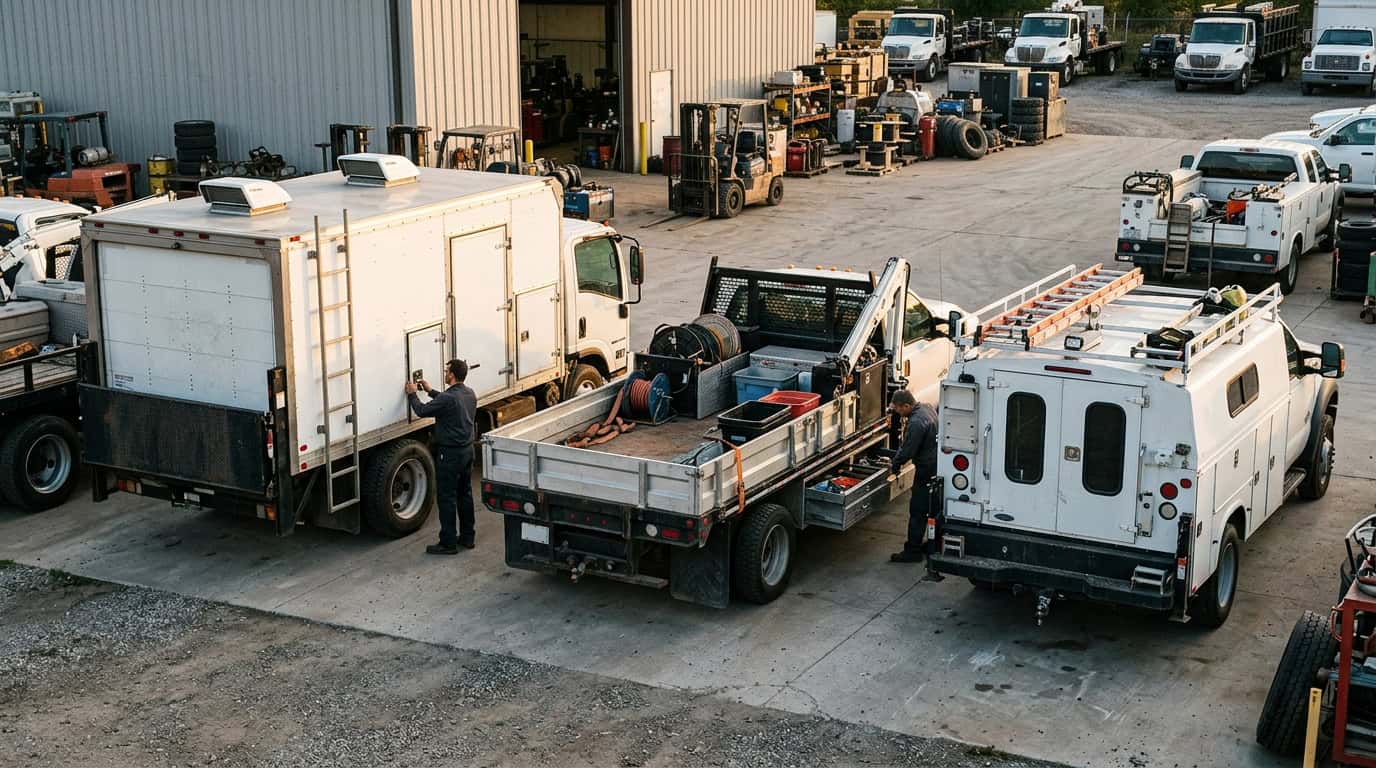
Service bodies and utility bodies give you organized access to tools, parts, and small equipment while keeping the truck ready for daily field work. A service body suits repair crews that need enclosed compartments, drawers, and work surfaces, while a utility body works well when you carry longer tools, ladders, or jobsite materials. Dump bodies are a strong choice for landscaping, construction, and public works because they handle loose loads such as soil, gravel, and debris, then unload them quickly. Box bodies protect packaged goods, supplies, and equipment from weather, making them useful for delivery routes and mobile service teams. When temperature control matters, refrigerated bodies support food, pharmaceutical, and other temperature sensitive cargo through changing operating conditions.
Crane bodies combine storage with lifting equipment, helping you load heavy pumps, generators, or materials without bringing separate lifting machinery to the site. Your crew size and work method should guide the layout, since technicians may need individual compartments while a larger crew may require open floor space or dedicated access points. Vocational configurations can include bodies for towing, waste collection, aerial work, emergency response, landscaping, and municipal maintenance. Each setup calls for the right payload rating, body dimensions, tie downs, lighting, power systems, and controls. Road conditions, weather, worksite access, and the number of daily stops also affect the body style that will serve your fleet best.
Good customization starts with the work rather than the body name, so review what you carry, how often you load it, and where the truck operates. Consider payload capacity, crew access, storage security, maintenance needs, and the balance between interior room and exterior equipment. Hackney, based in Washington, North Carolina, draws on deep roots in the state and a long history of building vocation specific truck bodies, trailers, shelving, parts, and fleet solutions. Clear daily task requirements help you choose a body that supports productivity without adding equipment your crew will not use.
Fleet Truck Upfit Specifications And Integration
Fleet truck body customization starts with the chassis because every other specification depends on its limits. You need to match the chassis selection, gross vehicle weight rating, payload, wheelbase, and axle capacity to the body, tools, crew, and materials the truck will carry. Body dimensions must fit the available frame space while preserving turning clearance, departure angle, and service access. Center of gravity also matters, especially when you add cranes, lifts, tanks, or tall storage that can affect handling and stability. Hackney uses these details to help you build a work truck that carries its assigned load without placing excess strain on the frame, suspension, brakes, or tires.
A practical body design puts frequently used equipment within easy reach and keeps heavier items low and close to the vehicle centerline. You can specify storage layouts, access doors, lighting, shelving, drawers, bins, and tool systems around the way your crews actually work. Compartments should open safely in traffic areas, while grab handles, steps, and nonslip surfaces can make daily loading and unloading easier. Interior and exterior lighting should support early morning, nighttime, and roadside service work without creating glare for other drivers. With roots in North Carolina and a base in Washington, NC, Hackney builds vocation specific solutions around real fleet routines and service conditions.
Modern upfits also need to work with the truck’s electronic and power systems. Power takeoff equipment, hydraulic components, auxiliary batteries, inverters, warning lights, and controls should be sized together so the electrical system can support the body without draining the starting batteries or creating wiring problems. Telematics can track location, utilization, maintenance data, and equipment status, while advanced driver assistance systems, or ADAS, require careful placement of bumpers, cameras, sensors, mirrors, and body panels. Your upfitter should confirm that body mounting and added equipment do not block sensors or interfere with factory safety functions. Early coordination among the chassis provider, body manufacturer, and fleet team helps deliver a finished truck that is safe, serviceable, and ready for its intended work.
Fleet Truck Customization For Efficiency
Selecting the right body materials can improve fuel economy and payload capacity across your fleet. Aluminum, high strength steel, and composite panels each offer different benefits in terms of weight, durability, repair needs, and cost. A lighter body reduces the energy required to move the truck, while thoughtful reinforcement protects high wear areas such as floors, door frames, and mounting points. Matching the body design to your routes, cargo, and work conditions helps you avoid carrying equipment or material that does not support the job.
Modular components, organized storage, and ergonomic layouts can help your crew load faster and work with less strain. Shelving, drawers, partitions, and frequently used tools should be placed where operators can reach them without unnecessary bending, climbing, or searching. Standard mounting points and repeatable body designs also simplify repairs, parts stocking, driver training, and fleet standardization. Hackney can help you build vocation specific bodies that maintain a consistent layout across trucks while still addressing the needs of each work group.
Electric auxiliary power gives you another way to reduce fuel use and prepare for vehicle electrification. Battery powered systems can support work lights, liftgates, refrigeration controls, telematics, and other equipment without requiring the engine to run during stops, when the system is properly specified for the duty cycle. Planning for cable routing, battery space, charging access, and total electrical demand during the body design stage can prevent costly changes later. With roots in North Carolina and a home base in Washington, NC, Hackney brings practical fleet experience to truck bodies, trailers, shelving, parts, and power solutions built for the work ahead.
Fleet Truck Upfit Planning And Compliance
Start by gathering input from the people who use the trucks every day. Ask drivers and technicians about tool access, cargo movement, visibility, loading conditions, and common problems with current equipment. Then define clear specifications for payload, body dimensions, storage, lighting, power systems, climate needs, and the work performed at each stop. Include the chassis GVWR, axle ratings, wheelbase, and expected route conditions so the finished truck is matched to its job. A written specification gives your OEM and upfitter a common reference and helps prevent costly changes later.
Coordinate the chassis order, body design, and installation schedule from the beginning. Review drawings for weight distribution, mounting points, frame clearance, wiring, lighting, and access to service components before production starts. Your plan should address applicable Federal Motor Vehicle Safety Standards, state rules, workplace safety requirements, and any limits set by the chassis manufacturer. Confirm who is responsible for inspections, certifications, recalls, and warranty claims when work moves from the OEM to the upfitter. Regular timeline reviews also help you plan driver training, registration, replacement vehicles, and delivery dates around production changes.
Before accepting each vehicle, inspect the body installation and test the truck under working conditions. Check fasteners, welds, doors, latches, steps, lighting, controls, hydraulic systems, electrical connections, and safety equipment, then compare the completed truck with the approved specifications. Ask for service manuals, parts information, warranty contacts, and records that show which party supports each component. Hackney, based in Washington, North Carolina, draws on deep roots in the commercial vehicle body industry to support vocation specific bodies, trailers, shelving, parts, and fleet solutions. Looking beyond the purchase price to fuel use, maintenance access, downtime, resale value, and expected service life helps you choose a body that costs less to operate over the full fleet lifecycle.
Fleet Truck Customization Planning
Fleet truck body customization should start with the job your vehicles must perform, not with a catalog of available bodies. Begin by reviewing duty cycles, including daily mileage, stop frequency, payload, terrain, weather, and time spent at each worksite. A truck serving residential routes may need compact storage and easy access, while a service vehicle working in remote areas may need added payload capacity, onboard power, and weather resistant compartments. This review helps you choose a body that supports the work without adding weight or features your crews will not use.
Your operators can provide practical insight that specifications alone cannot capture. Ask where tools are placed, which compartments are difficult to reach, what causes delays, and how the body performs during loading, unloading, and routine maintenance. You should also consider future technology, such as battery powered tools, telematics, lighting controls, charging systems, and alternative power sources, so the body can adapt as your operation changes. Hackney, with deep roots in North Carolina and a base in Washington, NC, understands how these details affect daily productivity and vehicle life.
The purchase price is only one part of the ownership decision. Compare expected maintenance, repair access, fuel or energy use, payload impact, downtime, technician training, and the availability of replacement parts over the vehicle’s planned service life. A well planned upfit can reduce wasted space and repeated modifications, while a poorly matched body may create higher costs every time the truck returns to the shop. Before approving an upfit package, bring fleet managers, operators, maintenance staff, and finance leaders into the review so the final design works for the people who use and support it.
Build Truck Bodies Around the Job
Fleet truck body customization works best when you start with the job your vehicles must perform. You should match the body style, storage layout, payload capacity, and equipment to the work, whether your crews need a service body for tools, a dump body for material hauling, or a refrigerated body for temperature sensitive products. Route conditions, driver safety, loading methods, and maintenance access also deserve attention before the build begins. A well planned upfit can improve organization, reduce wasted movement, and help your truck spend more time working. It can also give you a consistent platform across the fleet while meeting the needs of different departments.
When you work with Hackney, you gain the support of a manufacturer with deep roots in North Carolina and a home base in Washington, NC. The right truck body is more than a container for equipment because it should support your people, protect your tools, and stand up to daily commercial use. By considering total operating costs, service requirements, future changes, and driver feedback, you can make a sound investment for the full life of the vehicle. Thoughtful customization helps your fleet stay productive, organized, and ready for the work ahead.
Frequently Asked Questions
1. What is fleet truck body customization?
Fleet truck body customization matches your truck body, equipment, and onboard systems to the work your vehicles perform. You can configure service bodies, dump bodies, refrigerated bodies, utility bodies, and other options around your cargo, tools, routes, crew, and jobsite conditions.
2. How do you choose the right truck body for your fleet?
Start with the daily work. Consider what you carry, how much it weighs, how often you load and unload, where the truck operates, and what tools your crew needs on hand. You also need to review chassis specifications, axle ratings, payload capacity, body dimensions, and the space required for future needs.
3. What storage features can improve a work truck?
Well planned storage gives every tool and part a clear place, which helps drivers and technicians work faster. Shelving, drawers, adjustable compartments, bins, ladder racks, tie downs, interior lighting, and lockable exterior compartments can protect equipment while keeping weight organized. Hackney builds shelving and storage solutions around the way your fleet operates.
4. How can a custom truck body improve safety?
Safety starts with a body that supports clear access, stable loading, and organized equipment. Steps, grab handles, nonslip surfaces, proper lighting, secure tie downs, and well placed controls can reduce unnecessary climbing, reaching, and movement around the vehicle. You should also keep the body within chassis weight limits and review how the truck will be used at active jobsites.
5. Can you add power systems and other equipment to a fleet truck body?
Yes. Depending on the job, you can add generators, inverters, compressors, auxiliary batteries, liftgates, cranes, refrigeration systems, telematics, and other onboard equipment. Select each system based on actual operating needs, available payload, power demand, service access, and the space available on the truck.
6. Which materials are commonly used for custom truck bodies?
Aluminum, steel, and composite materials each offer different benefits. Aluminum can reduce body weight, steel provides strength for demanding work, and composite materials can support corrosion resistance and long service life in specific applications. The right choice depends on payload, weather exposure, impact risk, maintenance needs, and your operating environment.
7. How does customization affect payload and truck performance?
Every body, compartment, accessory, and onboard system adds weight, so the full configuration must be planned around the chassis and axle ratings. A properly matched body helps you carry the tools and materials you need without exceeding safe limits. Review curb weight, cargo weight, axle distribution, towing needs, and route conditions before placing the truck in service.
8. Why work with Hackney for fleet truck body customization?
Hackney has deep roots in North Carolina and is based in Washington, NC, where we build vocation specific truck bodies, trailers, shelving, parts, and fleet solutions. We understand that fleet equipment faces heavy use, changing weather, tight schedules, and demanding operators. Our team can help match the body and equipment package to your work, your crew, and the conditions your vehicles face every day.