

Choosing an aluminum or steel truck body affects more than the purchase price. Material selection changes curb weight, payload, towing, corrosion resistance, repair methods, and long term operating costs. The right choice depends on how you use your truck. Many modern pickups and work vehicles use a mixed material design with aluminum body panels and a high strength steel frame.
At Hackney, with deep roots in North Carolina and a home base in Washington, NC, we understand that fleet equipment must stand up to daily loading, road wear, and service demands. Aluminum can reduce weight and resist conventional red rust, while steel often offers simpler repairs and strong dent resistance in demanding work. Comparing these tradeoffs helps you choose a body that fits your payload, maintenance plan, and budget.
Key Takeaways
Aluminum truck bodies significantly reduce weight compared with steel, increasing available payload and potentially improving fuel economy or electric driving range. Actual benefits depend on the body design, chassis ratings, cargo, and operating conditions.
Steel offers strong dent resistance, lower upfront cost, and simpler repair and modification, while aluminum resists conventional red rust but requires specialized repair tools, training, and corrosion protection.
Choose the material based on your routes, payload, impact exposure, maintenance plan, repair network, and total ownership costs—not purchase price alone.
Mixed-material construction, such as aluminum body panels on a high-strength steel frame, often provides the best balance of weight savings, structural strength, durability, and serviceability.
Introduction to Aluminum vs Steel Truck Body
When you compare an aluminum truck body with a steel body, weight is one of the clearest differences. Aluminum has a density of about 2.7 grams per cubic centimeter, compared with about 7.8 to 7.9 for steel. As a result, an aluminum body can reduce curb weight and leave more capacity for tools, cargo, or equipment. Lower weight may also support better fuel economy in a conventional truck or help extend driving range in an electric work truck. Steel remains heavier, but modern high strength steel can reduce material thickness while preserving the strength needed for demanding service. Your best choice depends on how the truck will be loaded, driven, and maintained.
Corrosion resistance, repairability, and cost also shape the decision. Aluminum does not develop conventional red rust, although it can still corrode when exposed to road salt, moisture, or contact with other metals. Steel can resist corrosion with proper coatings and maintenance, but exposed areas may rust if damage reaches the protective finish. Steel is generally easier to weld, modify, and repair, and many repair shops already have the tools and experience to work with it. Aluminum repairs may require different equipment and training, which can affect repair time and cost. Steel panels may also resist certain dents better during rough daily work.
For many modern work trucks, the practical answer is a mixed material design rather than an all aluminum or all steel body. Aluminum body panels can reduce weight and resist common corrosion, while a high strength steel frame provides the support needed for towing, payloads, and repeated commercial use. You should also consider body cost, expected repair needs, local service resources, and the truck’s working environment before choosing a material. Based in Washington, North Carolina, Hackney brings deep North Carolina manufacturing roots to vocation specific truck bodies, trailers, shelving, parts, and fleet solutions. That experience helps you match body construction to the real demands of your operation.
Aluminum and Steel Truck Body Weight
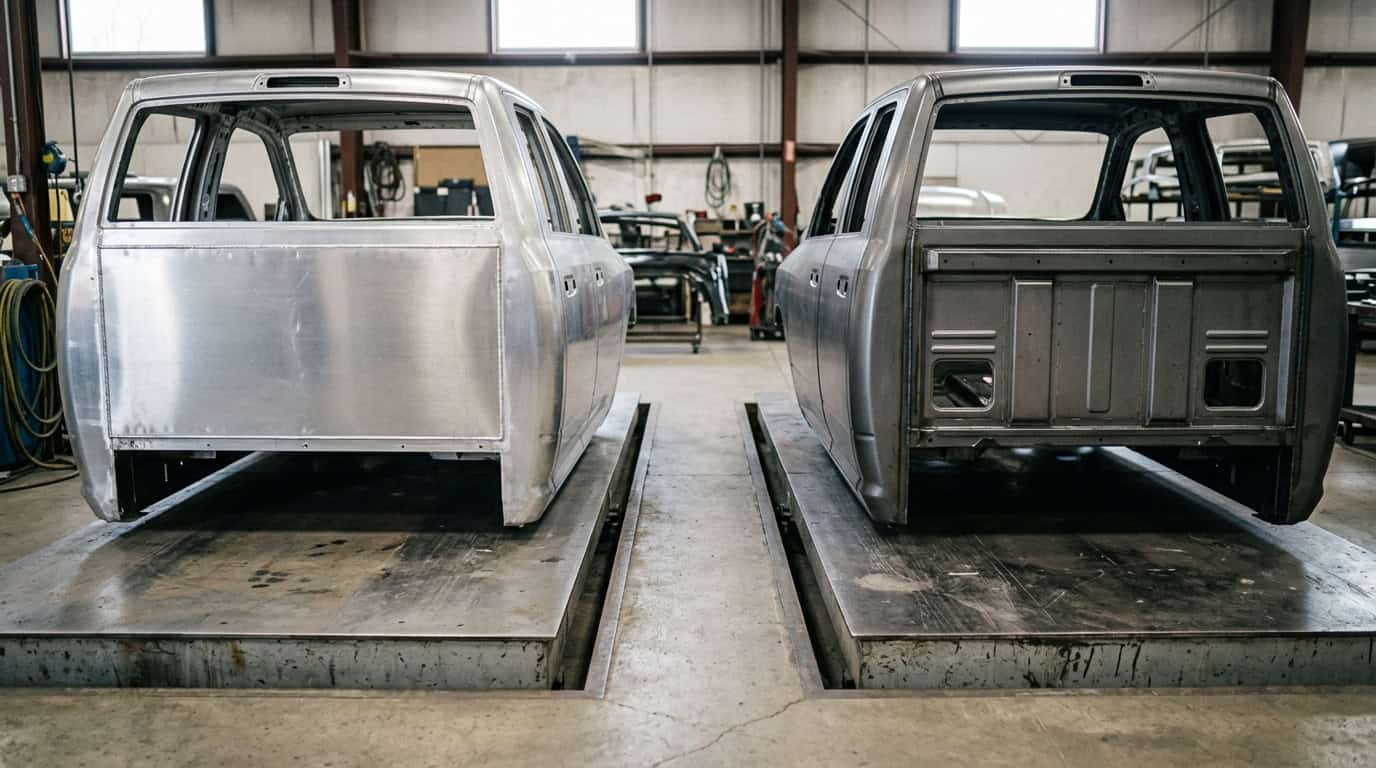
Aluminum has a density of about 2.7 grams per cubic centimeter, compared with roughly 7.8 to 7.9 for steel. An aluminum truck body can therefore weigh much less when the design provides similar strength and function. Lower curb weight may give you more payload capacity because less of the truck’s gross vehicle weight rating is already used by the body. For example, a lighter service body can leave more room for tools, parts, and equipment without exceeding the truck’s rated capacity. Steel bodies add more mass, although high strength steel and thinner panels can narrow the difference in some applications. Actual weight savings depend on body style, storage features, mounting hardware, and the strength required for the job.
A lighter body can reduce the effort required from the engine or motor, which may support better fuel economy and towing performance under certain conditions. It does not automatically raise the truck’s tow rating because that limit also depends on the frame, axles, brakes, cooling system, tires, drivetrain, and manufacturer ratings. On an electric truck, reduced body weight can help extend driving range, especially when the saved weight is not replaced with additional equipment or cargo. You should also consider aerodynamics, tire selection, route conditions, and how your crew loads the truck before estimating actual savings. Based in Washington, North Carolina, Hackney accounts for these factors when developing vocation specific bodies that balance weight, durability, storage, and daily fleet demands.
Aluminum and Steel Truck Body Durability
Aluminum truck bodies resist conventional red rust, making them well suited to wet roads, road salt, and outdoor service. The metal forms a thin oxide layer that slows further surface damage, but oxidation can still appear when the finish is scratched, neglected, or exposed to harsh conditions. Aluminum panels may also dent more readily under sharp impacts, although many dents can be repaired with the right tools and procedures. You should also watch for galvanic corrosion, which occurs when aluminum touches a different metal in the presence of moisture and an electrical connection.
Steel can provide strong impact performance, especially in work environments where bodies face frequent contact with equipment, loading areas, or rough jobsites. When properly coated and maintained, steel resists vibration fatigue and holds up well under repeated service. However, chips, scratches, trapped moisture, and road salt can expose bare steel and lead to conventional red rust. Regular washing, coating inspections, and prompt touch up work help protect those areas. Body design, mounting points, fasteners, and weld quality also affect how either material handles vibration over time.
For many modern work trucks, a mixed material design provides a practical balance, with aluminum panels paired with a high strength steel frame or support structure. You should judge durability by the full body system, not by panel material alone. Weather protection, drainage, joint design, and maintenance all affect service life. Hackney draws on deep manufacturing roots in North Carolina and its base in Washington, NC, to build vocation specific truck bodies around the working conditions your fleet faces. The right choice depends on your exposure to impacts, salt, moisture, repairs, and daily loading demands.
Aluminum and Steel Truck Body Repairs
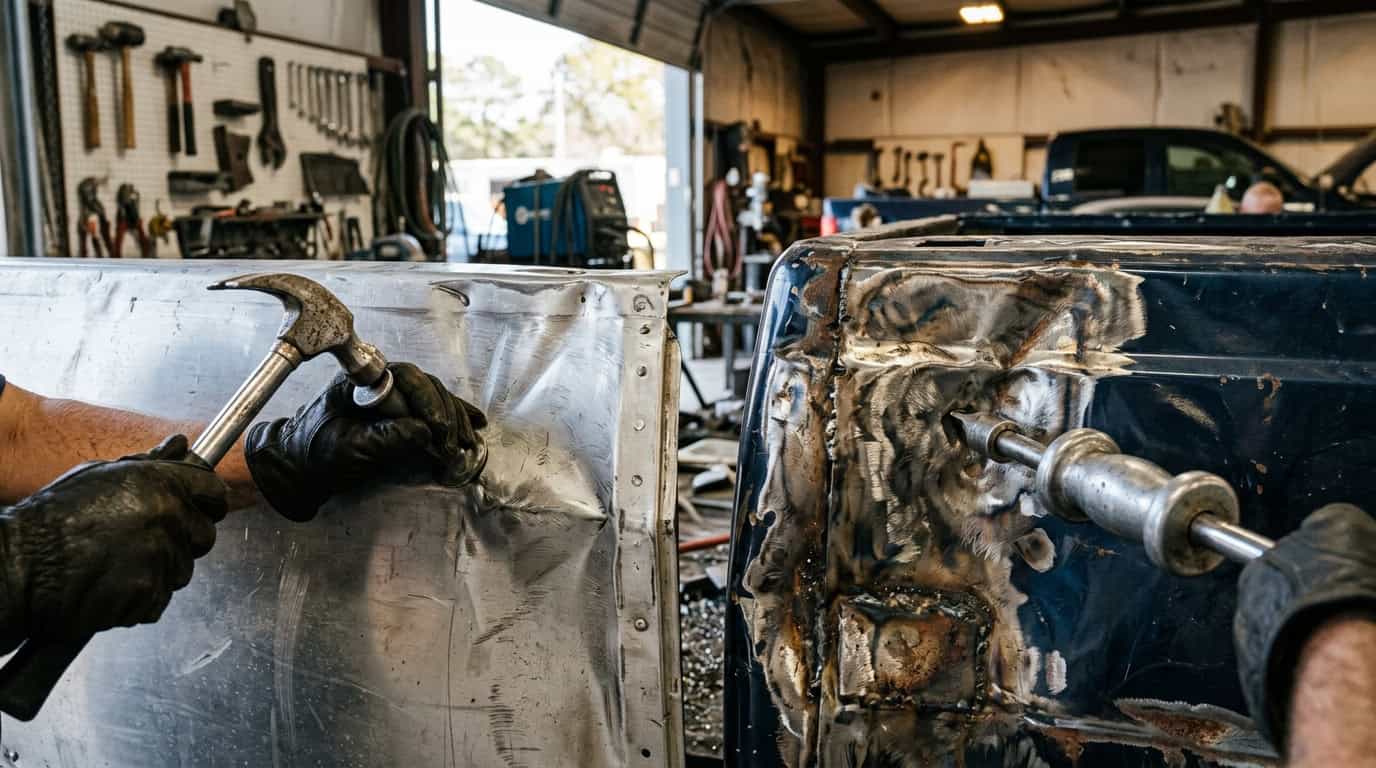
Aluminum and steel truck bodies require different repair methods, even when the damage looks similar. Steel panels are generally easier to weld, reshape, and replace because most body shops have the needed equipment and experience. Aluminum welding requires controlled heat, clean surfaces, proper wire and shielding gas, and technicians trained to prevent contamination and weak joints. Replacement panels also need material specific fasteners, adhesives, and corrosion protection, especially where aluminum meets steel. If the repair involves a mixed material body, the facility must follow the manufacturer’s procedures for each section.
Dent repair and refinishing can also vary between the two materials. Steel often allows more reshaping, while aluminum may have greater springback and can require panel replacement when creases are sharp or access is limited. Refinishing aluminum calls for careful surface preparation and separation from steel to help prevent galvanic corrosion, which can occur when dissimilar metals contact each other in the presence of moisture. Modifying a steel body is usually more straightforward, while aluminum modifications may require dedicated saws, drills, rivet tools, bonding products, and repair methods. Using the wrong tools can damage the material and create problems after the truck returns to service.
Your choice of repair facility can affect both downtime and operating cost. A shop without aluminum training or dedicated tools may need to send work elsewhere, order specialized parts, or spend more time diagnosing the damage. That delay can keep a truck out of service longer, affecting routes, labor planning, and customer commitments. When you operate a mixed material truck body, confirm that the repair team can work safely with both aluminum and steel. Ask how replacement parts and refinishing will be handled. Based in Washington, North Carolina, Hackney draws on deep roots in commercial truck body manufacturing to help fleets consider repair access, service requirements, and long term operating needs before selecting a body design.
Choosing Aluminum or Steel Truck Body Construction
Aluminum and steel truck bodies serve different operating priorities, so your choice should start with the work, not the material alone. Aluminum usually costs more at purchase, but its lower weight can increase payload capacity, reduce fuel use, and support longer range in electric vehicles. Steel often has a lower upfront cost and can provide strong dent resistance for demanding construction and vocational work. If your delivery fleet carries dense goods every day, aluminum may help you stay within weight limits while carrying more useful cargo. If your service body faces frequent impacts or needs regular modifications, steel may offer a practical advantage.
Your local repair network also matters because aluminum and steel require different welding methods, tools, and technician skills. Aluminum resists conventional red rust, which can help in coastal areas, on winter roads, and in other corrosive conditions. Steel needs sound coatings and regular inspection to protect its service life. Compare expected years in service, repair frequency, downtime, payload gains, and resale value as part of total ownership cost. Many modern trucks combine aluminum body panels with a high strength steel frame, giving you a useful balance of low weight, strength, and repair access. With deep roots in North Carolina and a home in Washington, NC, Hackney understands that the right body depends on your routes, cargo, work conditions, and fleet support.
Aluminum vs Steel Truck Body Conclusion
Choosing between an aluminum and steel truck body comes down to how you use the vehicle, maintain it, and measure operating costs. Aluminum weighs much less than steel, which can give you more payload capacity and may reduce fuel use or extend driving range in an electric truck. It also resists conventional red rust, although fasteners, damaged areas, and contact with other metals still require proper attention. Steel adds weight, but it is familiar to most repair shops and can provide strong dent resistance in demanding work environments.
Your repair and modification plans should also guide the decision. Steel is generally easier to weld, cut, and modify when you need custom compartments, mounts, or field repairs. Aluminum repairs require different tools, training, and procedures, so access to qualified technicians matters when you manage vehicles across several locations. For a fleet, the right body supports your payload needs while keeping repair time, service access, and long term operating costs in view.
For many modern work trucks, a mixed material design offers a practical balance. An aluminum body paired with a high strength steel frame can reduce body weight while providing a strong foundation for equipment, cargo, and towing demands. At Hackney, based in Washington, North Carolina, we understand that fleet equipment must hold up to daily routes, changing payloads, and real shop conditions. By matching materials to each part of the truck, you can gain useful weight savings without giving up repair familiarity, structural strength, or modification flexibility.
Choose the Right Truck Body Material
Choosing between an aluminum and steel truck body depends on how you work, what you carry, and where the vehicle operates. Aluminum can lower curb weight, which may give you more payload capacity and support better fuel economy or electric vehicle range. It also resists conventional red rust, an important benefit for trucks exposed to rain, road salt, and jobsite conditions. Steel remains a practical choice when dent resistance, simple welding, easy modification, and broad repair access matter most.
For many fleets, a mixed material design offers a useful balance, with aluminum body panels mounted over a high strength steel frame. You get the weight savings of aluminum while retaining the strength and mounting support needed for demanding work. At Hackney, with deep roots in North Carolina and a home base in Washington, we understand that body materials must match the route, payload, equipment, and service demands of your operation. The right truck body delivers dependable performance and manageable ownership costs throughout its working life.
Frequently Asked Questions
1. What is the main difference between an aluminum and steel truck body?
An aluminum truck body weighs much less than a comparable steel body, which can leave more capacity for cargo, tools, or equipment. Steel bodies are heavier, but they offer strong dent resistance and are often simpler to weld, modify, and repair. Your choice should reflect how much you carry, where you drive, and how the truck will be serviced.
2. Which truck body is better for payload and fuel economy?
Aluminum usually has the advantage because its lower weight can increase available payload and reduce the energy needed to move the truck. That may improve fuel economy in a conventional vehicle or help extend driving range in an electric work truck. Actual results depend on the chassis, body design, cargo, route, and driving conditions.
3. Does an aluminum truck body resist corrosion better than steel?
Aluminum does not develop conventional red rust, but it can still corrode when exposed to road salt, moisture, or contact with other metals. Steel can provide long service life when its coatings stay intact and damaged areas are repaired promptly. Regular washing, inspection, and maintenance matter for either material, especially in winter conditions and coastal areas.
4. Is an aluminum or steel truck body easier to repair?
Steel is generally easier to weld, straighten, modify, and repair because more repair shops have the required equipment and experience. Aluminum repairs require dedicated tools, clean work areas, and technicians trained to prevent contamination and galvanic corrosion. Before you choose aluminum, confirm that qualified repair support is available in the areas where your fleet operates.
5. Which material provides better dent resistance for demanding work?
Steel often handles sharp impacts and repeated contact with loading equipment better, especially in high wear areas. Aluminum can perform well when properly designed, but it may be more likely to dent or require panel replacement after a hard impact. Body construction, reinforcement, door design, and the way you load the truck all affect actual durability.
6. Does an aluminum truck body cost more than a steel body?
Aluminum may have a higher initial purchase price, while steel often has a lower entry cost and more familiar repair processes. Lower weight and reduced exposure to red rust can help offset that difference through payload capacity, operating costs, and service life. Compare total ownership cost, including fuel, repairs, downtime, and expected years of use.
7. Can a truck use both aluminum and steel in its construction?
Yes. Many modern trucks use aluminum body panels with a high strength steel frame, combining lower body weight with the strength needed for demanding chassis loads. The connection points must be designed and maintained carefully because moisture and contact between dissimilar metals can contribute to galvanic corrosion.
8. How can Hackney help you choose between an aluminum and steel truck body?
Hackney builds vocation specific truck bodies, trailers, shelving, parts, and fleet solutions around the conditions your operation faces. With deep roots in North Carolina and a base in Washington, NC, we understand daily loading, road wear, service access, and fleet uptime. We can help you match body material, construction, storage, and equipment to your payload, route, maintenance plan, and budget.